
From Newborn Calf to Productive Dairy Cow: A Complete 11-Stage Heifer Growth Guide
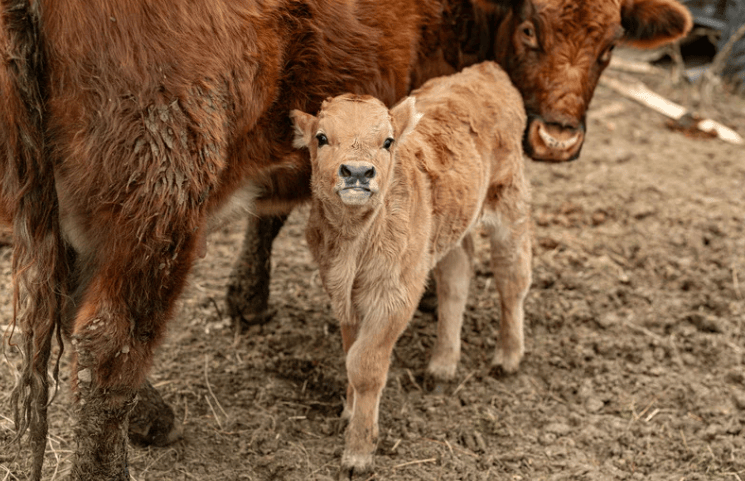
A productive dairy cow is the result of years of careful management—not something that begins when she enters the milking herd. Her journey starts at birth, when a calf weighing around 40 kg begins developing toward a mature body weight that may reach approximately 650 kg.
Every stage matters. Nutrition, health, growth rate, housing, reproductive development, comfort, and farm management decisions all influence whether a replacement heifer reaches her potential.
This 11-stage dairy heifer development guide explains the major milestones from the first day of life through the first 60 days after calving. For farms improving their overall management system, integrating growth monitoring with modern dairy farm equipment can make these targets easier to track and manage.
Why Heifer Rearing Should Be a Priority
Replacement heifers represent the future of a dairy herd. However, problems during the calf and growing stages can remain unnoticed for months.
A heifer that experiences poor nutrition, disease, inadequate growth, or uncomfortable housing may eventually reach the milking herd with reduced productive potential. The important point is that many of these problems begin well before first calving.
A structured cow comfort and dairy management program can help create better conditions for animals throughout their development.
The 11 Key Stages of Heifer Development
Stage 1: Birth to 24 Hours — Give the Calf the Best Possible Start
The first day is one of the most important windows in a calf’s life.
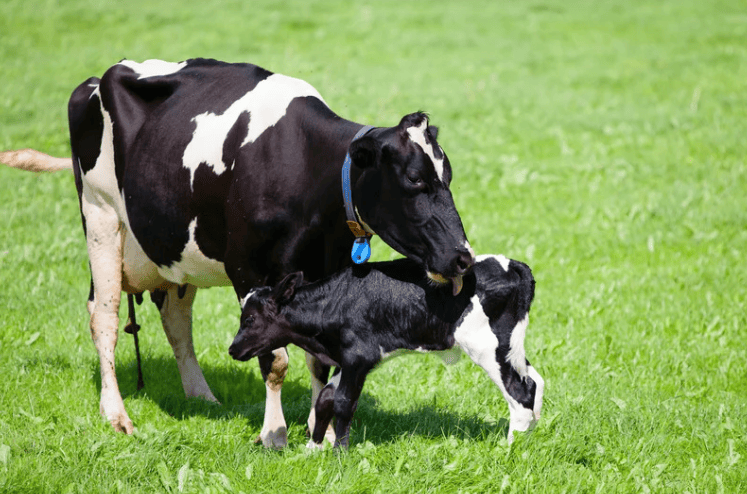
Immediately after birth, the calf should be assessed, dried and provided with appropriate colostrum. Early colostrum management plays an important role in passive immunity and helps establish the foundation for healthy development.
Farmers should record:
- Birth date
- Birth weight
- Dam identification
- Calf identification
- Colostrum feeding
- Initial health observations
This information becomes the starting point for the calf’s growth record.
Maintaining good hygiene and organized farm routines is equally important. Appropriate dairy farm equipment can help improve consistency in everyday animal management.
Stage 2: Days 2–7 — Establish Health and Feed Intake
During the first week, attention should shift toward maintaining the calf’s health and establishing consistent feeding.
Milk or milk replacer remains a major nutritional source, while fresh drinking water and calf starter should be introduced according to the farm’s feeding program.
Watch carefully for:
- Diarrhea
- Dehydration
- Respiratory problems
- Reduced appetite
- Weakness
- Poor growth
Early detection is critical. A small health problem identified quickly can be much easier to manage than a disease episode that progresses for several days.
Reliable access to clean water should also be part of the calf-management routine. Farms can explore livestock water trough solutions as part of their broader water-management system.
Stage 3: Weeks 2–4 — Encourage Rumen Development
During the first month, the calf gradually begins consuming more starter feed. This encourages rumen development and prepares the animal for the transition away from a milk-based diet.
At this point, farmers should start tracking more than just survival and health.
Useful indicators include:
- Body weight
- Average daily gain
- Starter consumption
- Health treatments
- Water intake
- General activity
Consistent records help identify calves that are growing slower than expected.
For larger dairy operations, herd management solutions can support better organization of animal records and management data.
Stage 4: 1–2 Months — Preparing for Weaning
Weaning should be treated as a developmental milestone rather than simply an age milestone.
Before reducing milk intake, the calf should demonstrate adequate starter consumption, consistent growth and good general health.
First Major Decision: Is the Calf Ready for Weaning?
Consider:
- Is starter intake consistent?
- Is body weight appropriate?
- Is the calf healthy?
- Is growth continuing steadily?
- Is the calf consuming sufficient water?
If these conditions are not met, rushing the weaning process can create unnecessary stress and a temporary growth setback.
Stage 5: 2–3 Months — Managing the Post-Weaning Period
The period immediately after weaning is another important checkpoint.
The calf is now relying increasingly on solid feed for nutrients. Any sudden reduction in feed intake or health challenge can cause a noticeable growth slowdown.
Farm managers should monitor body weight, appetite, manure consistency, respiratory health and overall activity.
Housing conditions also matter. Good airflow can help reduce environmental stress and support healthier animals. Appropriate dairy ventilation and fan systems can be particularly valuable in warm and humid dairy-farming environments.
Stage 6: 3–6 Months — Building the Growing Heifer
By three months, the calf has entered a more intensive growth phase.
The objective is steady structural development, not simply rapid weight gain. Nutrition should support skeletal and muscular development while avoiding excessive body condition.
Important measurements include:
- Current body weight
- Average daily gain
- Body condition
- Height and frame development
- Health history
- Feed intake
Visual assessment alone can be misleading. Two heifers of the same age may have very different weights and development patterns.
Regular weighing provides a more objective way to evaluate progress. Farms can use cattle weighing and livestock weighing solutions to establish measurable growth benchmarks.
Stage 7: 6–9 Months — Preparing for Future Reproduction
At six to nine months, the heifer is developing into a potential breeding animal.
Nutrition should encourage healthy growth while avoiding excessive fat accumulation. Genetics, breed, climate, nutrition and management all influence when a heifer reaches puberty.
Rather than asking only:
“How old is she?”
farmers should ask:
“Has she developed enough to move toward breeding?”
This approach allows the breeding program to be based on actual development rather than age alone.
Stage 8: Around 9–14 Months — Reaching the Breeding Target
One of the most useful reference points for a herd targeting a mature cow weight of 650 kg is approximately 55% of mature body weight at breeding.
650 kg × 55% = 357.5 kg
That means a practical reference target is around 350–360 kg, although the appropriate breeding weight can vary according to breed, genetics and farm conditions.
For many well-managed heifers, this target may be reached around 13–14 months of age.
Second Major Decision: Is the Heifer Ready for Breeding?
Evaluate:
- Body weight
- Structural development
- Body condition
- Reproductive maturity
- Health status
- Growth history
The goal is not to breed simply because a heifer has reached a certain age. The goal is to breed an animal that has reached an appropriate level of physical and reproductive development.
Stage 9: Pregnancy to Pre-Calving — Supporting Continued Development
After breeding, the heifer has another major job: growing while supporting pregnancy.
Her nutritional program should provide sufficient nutrients for continued development without encouraging excessive body condition.
For a mature cow expected to weigh approximately 650 kg, a useful first-calving target is 85–90% of mature body weight.
Target calving weight: approximately 555–585 kg
This benchmark helps farmers evaluate whether the replacement heifer has developed sufficiently before entering the milking herd.
During late pregnancy, comfortable housing becomes increasingly important. Proper cow comfort equipment can support better resting and movement conditions.Stage 10: 22–24 Months — First Calving
For many dairy systems, approximately 22–24 months is a useful reference range for first calving.
However, age should be considered alongside body weight, body condition, reproductive development, and overall health.
Third Major Decision: Is the Heifer Ready for Calving?
Before first calving, check:
- Pregnancy status
- Body weight
- Body condition
- Udder development
- Mobility
- Hoof health
- General health
- Close-up management requirements
A heifer should not be considered successful simply because she reaches the calving date. The objective is to enter lactation in a condition that allows her to transition successfully into the productive herd.
Stage 11: First 60 Days in Milk — The Real Production Test
First calving marks the beginning of a new phase rather than the end of the heifer program.
During the first 60 days in milk, a first-calf cow must adapt to:
- Lactation
- Increased feed requirements
- Milking routines
- Social changes
- Post-calving recovery
- Reproductive recovery
This is a demanding period, and careful monitoring can help identify problems early.
Fourth Major Decision: Is the First-Calf Cow Adapting Successfully?
Track:
- Milk production
- Feed intake
- Body condition
- Weight changes
- Udder health
- Mobility
- Disease events
- Reproductive progress
A reliable milking machine and dairy milking system can support efficient and consistent milking routines as the animal enters productive life.The Three Most Important Heifer Benchmarks
For a dairy cow with an approximate mature weight of 650 kg, three numbers provide a useful framework.
Breeding: 55% of Mature Weight
Approximately 358 kg
This is a useful reference for determining whether the heifer has reached an appropriate developmental stage for breeding.
First Calving: 85–90% of Mature Weight
Approximately 555–585 kg
The objective is to have sufficient body development to support first lactation while avoiding excessive body condition.
First Calving Age: 22–24 Months
Age provides another important KPI, but it should always be evaluated together with body weight and physical development.
Five Decision Points That Can Change the Outcome
A successful heifer program can be simplified into five major decisions:
1. Weaning
Is the calf eating enough starter and growing consistently?
2. Breeding
Has she reached the appropriate weight and reproductive development?
3. Close-Up
Is the pregnant heifer physically prepared for the final stage before calving?
4. First Calving
Has she reached the appropriate body weight and condition?
5. First 60 Days in Milk
Is she adapting successfully to lactation and the milking herd?
These checkpoints turn a long two-year development period into a series of measurable management decisions.
Don’t Wait Until Calving to Find a Problem
One of the most important lessons in replacement-heifer management is that visible problems often have invisible origins.
A heifer struggling after calving may have experienced:
- Poor colostrum management
- Disease during the calf stage
- Insufficient post-weaning growth
- Delayed breeding
- Inadequate pregnancy nutrition
- Poor body condition
- Housing stress
- Insufficient preparation for the transition into lactation
By the time the issue becomes visible in the milking herd, the original cause may have occurred months earlier.
That is why measuring growth throughout the journey is so important.
Building a Data-Driven Heifer Program
Modern dairy farming increasingly relies on measurable information rather than visual estimates.
A useful heifer management system should record:
Birth weight → Growth rate → Weaning status → Breeding weight → Pregnancy → Pre-calving weight → First calving → Early-lactation performance
Combining these records with herd management technology can help farmers identify animals that are ahead, on target or falling behind.
For farms adopting more advanced management practices, Delmer CowComfort AI can also form part of a broader technology-driven approach to monitoring animal comfort and dairy-farm conditions.
Frequently Asked Questions About Dairy Heifer Growth
How much should a newborn dairy calf weigh?
A newborn calf can weigh around 40 kg, although actual birth weight varies considerably depending on breed, genetics, sex and individual animal factors.
When should a dairy heifer be bred?
A common reference is around 13–14 months when the heifer has reached approximately 55% of her expected mature body weight. Breeding decisions should also consider reproductive maturity, health and structural development.
What weight should a heifer reach before first calving?
For a mature cow target of 650 kg, approximately 85–90% of mature weight corresponds to around 555–585 kg at first calving.
What is the ideal age at first calving?
Approximately 22–24 months is a useful target range in many dairy systems, although farm-specific and breed-specific targets can differ.
Why is weighing heifers important?
Body weight provides an objective measurement of growth. It helps farmers determine whether an animal is on track for important milestones such as weaning, breeding and first calving. Livestock weighing equipment can help make this process more consistent.
What should farmers monitor after first calving?
During the first 60 days in milk, farmers should monitor milk production, feed intake, body condition, health, mobility, udder health and reproductive recovery.
From 40 kg to 650 kg: Think in Stages
The development of a replacement heifer is a long process, but it becomes much easier to manage when divided into clear stages.
Birth → Early calf care → Rumen development → Weaning → Post-weaning growth → Growing heifer → Breeding → Pregnancy → Pre-calving → First calving → First 60 days in milk
The biggest advantage of this approach is that farmers don’t have to wait until a heifer enters the milking herd to evaluate her performance.
They can measure progress months earlier.
For a 650 kg mature-cow target, the most useful reference points are approximately 358 kg at breeding, 555–585 kg at first calving, and 22–24 months at first calving.
The exact targets should be adjusted according to breed, genetics, nutrition, climate and individual farm conditions.
Ultimately, successful replacement-heifer management comes down to one principle:
Measure growth early, make decisions at the right stage, and correct problems before they become expensive.
Explore Delmer Group’s dairy farm equipment for solutions covering milking, weighing, cow comfort, water management, ventilation and herd management.