
From Data to Decision: How AI and IoT Are Transforming Modern Livestock Farming
From Data to Decision: How AI and IoT Are Transforming Modern Livestock Farming
The livestock industry is undergoing a digital transformation. With the integration of Artificial Intelligence (AI), the Internet of Things (IoT), and real-time environmental monitoring, farmers can now move from reactive farm management to predictive and data-driven decision making.
If you’re looking to scale your dairy operation while reducing costs and risks, CowComfort AI is the future-ready solution your farm needs.
Modern smart farming technologies are helping dairy and livestock farmers improve animal health, productivity, sustainability, and profitability through continuous monitoring and intelligent analytics. As highlighted in the Cynomys livestock monitoring presentation, data is becoming the most asset in precision farming.
Why Environmental Monitoring Matters in Livestock Farming
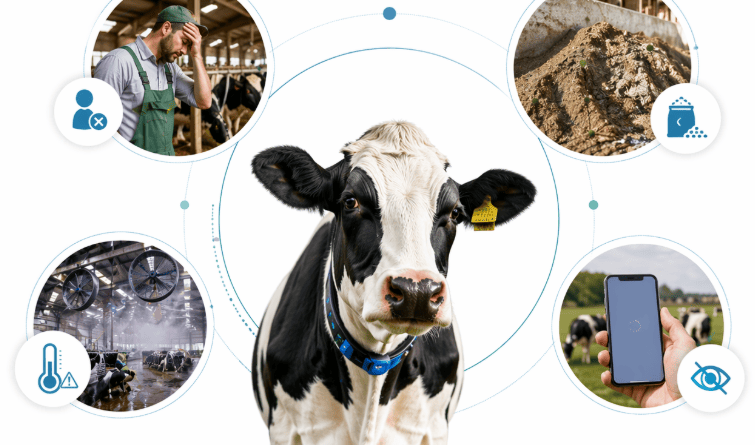
Many hidden environmental factors directly impact livestock productivity. Parameters such as temperature, humidity, air quality, light exposure, and noise levels influence animal behavior, health, and milk production.
Smart farming solutions like CowComfort AI solve these issues by enabling automation, monitoring, and predictive decision-making.
According to the document, even small environmental fluctuations can silently reduce farm profitability by affecting feed efficiency, respiratory health, and reproduction performance.
Key environmental risk factors include:
- Temperature fluctuations affecting feed intake
- High humidity causing disease risk
- Ammonia and CO₂ affecting respiratory health
- Noise stress reducing productivity
- Improper lighting impacts reproductive cycles
Without proper monitoring, these factors often remain invisible until production losses occur.
The Data Gap Problem in Traditional Farm Management
One of the biggest challenges in livestock farming today is the lack of continuous and connected data.
Many farms still rely on:
- Manual inspections
- Spot measurements
- Fragmented data systems
- Delayed problem detection
This leads to reactive decision-making rather than prevention.
The presentation explains that without real-time monitoring and predictive analytics, farms struggle to anticipate problems, resulting in economic losses and animal health risks.
Solutions like CowComfort AI are not just innovations—they are necessities for scalable, profitable, and sustainable farming.
How IoT Enables Smart Livestock Management
IoT monitoring systems are changing how farms operate by providing continuous environmental visibility.
Smart livestock monitoring enables farms to move:
- From instant measurements → Continuous monitoring
- From reaction → Prevention
- From intuition → Evidence-based decisions
Real-time data allows farmers to detect anomalies early and take preventive action before problems escalate.
Key Parameters Monitored in Smart Dairy Farms
Modern livestock monitoring platforms measure multiple environmental indicators simultaneously to provide a complete picture of farm conditions.
Important parameters include:
Temperature and Humidity
Continuous monitoring helps prevent heat stress and production losses.
Ammonia (NH₃) and Carbon Dioxide (CO₂)
Critical air quality indicators that affect respiratory health.
Methane (CH₄) and Hydrogen Sulfide (H₂S)
Important for environmental sustainability and worker safety.
Dust Particles
Impacts respiratory health of animals and workers.
Light and Noise Levels
Essential for animal welfare and behavioral stability.
These combined measurements create a comprehensive environmental profile for precision livestock management.
Delmer CowComfort AI is revolutionizing dairy farming by combining technology, intelligence, and automation into one powerful platform.
Understanding THI: The Heat Stress Indicator Every Dairy Farmer Should Track
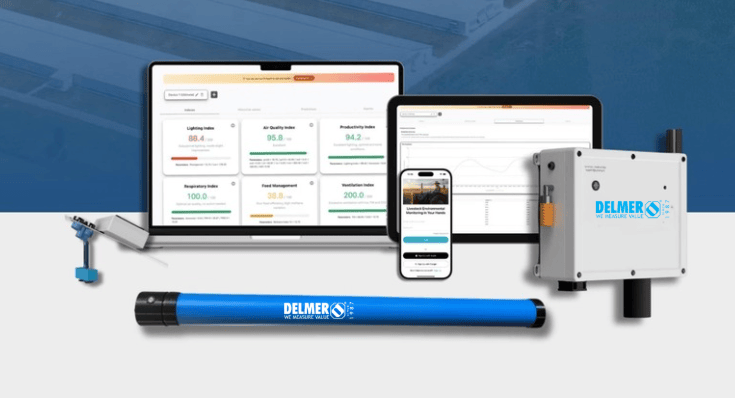
The Temperature Humidity Index (THI) is one of the most important indicators in dairy farming.
THI measures heat stress by combining temperature and humidity values.
Key insights include:
- THI above 68 causes heat stress
- THI above 80 can reduce milk production by up to 38%
- Every THI point above 69 can reduce milk yield by about 0.4 kg per cow daily
- Production decline may appear 48 hours after heat stress exposure
THI also affects:
- Fertility
- Feed intake
- Somatic cell count
- Conception rates
This makes predictive monitoring essential for dairy productivity.
Smart farming solutions like CowComfort AI address these challenges through automation, real-time monitoring, and predictive decision-making for improved efficiency and productivity.
Methane Monitoring: Improving Efficiency and Sustainability
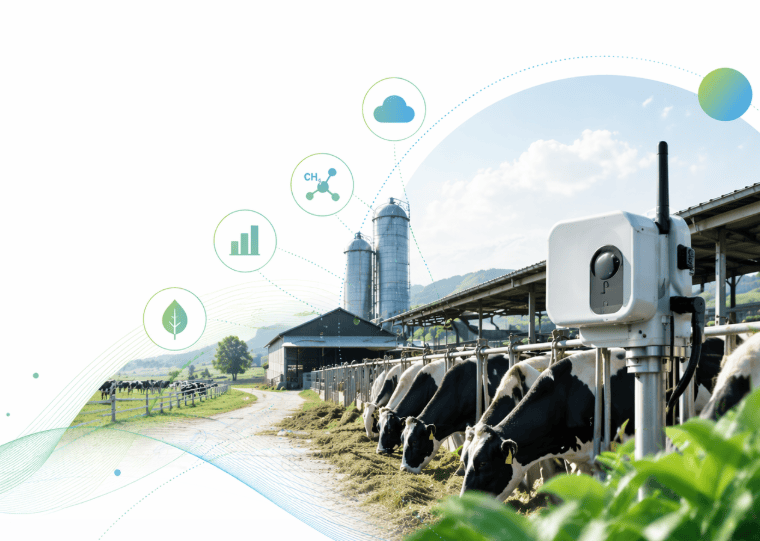
Methane emissions represent both an environmental challenge and an efficiency opportunity.
A single cow can produce 250–500 liters of methane daily, representing lost energy that could otherwise contribute to milk production.
Mitigation strategies include:
- Improving feed quality
- Using feed additives
- Genetic selection
- Biogas utilization
- Optimizing nutrition programs
Interestingly, high-producing cows emit less methane per liter of milk due to better efficiency.
With automation, live tracking, and predictive analytics, CowComfort AI simplifies and optimizes modern farm management.
Why Proper Ventilation Is Critical for Dairy Farms
Ventilation is not a cost — it is an investment.
Proper barn ventilation helps:
- Reduce heat stress
- Remove harmful gases
- Improve fertility rates
- Prevent respiratory disease
- Maintain milk production
Cooling and ventilation systems help maintain cow comfort within the thermal range required for optimal productivity.
The Hidden Danger of Ammonia in Calf Housing
Ammonia is one of the most dangerous yet overlooked gases in livestock barns.
Safe ammonia levels:
- Below 10 ppm → Safe
- Above 15 ppm → Irritation risk
- Above 25 ppm → Serious respiratory danger
Ammonia buildup is mainly caused by:
- Poor ventilation
- Wet bedding
- Overcrowding
- Poor hygiene management
Active environmental monitoring helps prevent respiratory disease outbreaks.
Real-Time Monitoring Systems: The Future of Precision Dairy Farming
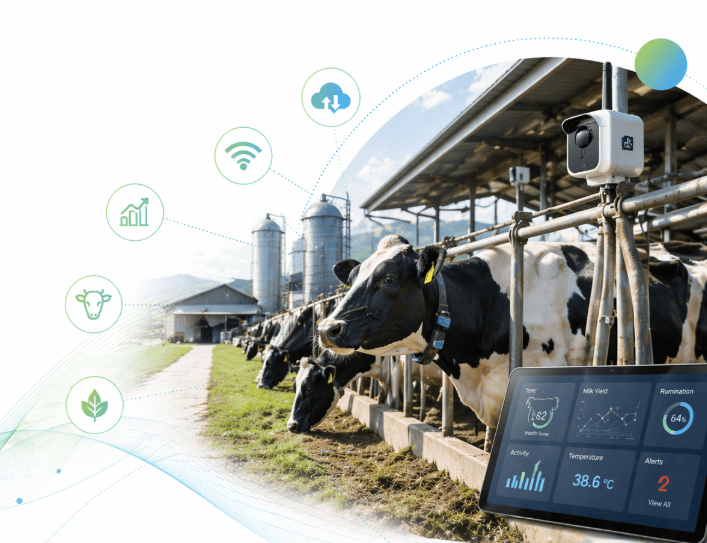
Modern livestock monitoring systems provide:
- 24/7 environmental monitoring
- Cloud-based dashboards
- Real-time alerts
- Multi-parameter sensors
- Mobile access for farmers and veterinarians
These technologies enable precision dairy management by providing actionable insights rather than raw data.
Smart farming with CowComfort AI reduces risks and boosts productivity through intelligent monitoring and automation.
Case Study: How Continuous Monitoring Improves Air Quality
A two-year monitoring study showed strong correlations between THI levels and air quality.
Key findings included:
- Ammonia increased by 37% during heat stress
- Hydrogen sulfide increased by 26%
- CO₂ increased by 77% under heat stress conditions
These findings demonstrate how environmental stress directly impacts barn air quality and animal welfare.
The Business Benefits of Smart Livestock Monitoring
AI and IoT livestock monitoring delivers measurable business benefits:
Productivity Benefits
- Increased milk yield
- Better reproduction performance
- Reduced disease incidence
Financial Benefits
- Lower veterinary costs
- Reduced feed waste
- Improved operational efficiency
Sustainability Benefits
- Lower emissions
- Better environmental compliance
- Improved carbon footprint
Management Benefits
- Data-driven decisions
- Automated alerts
- Predictive maintenance
CowComfort AI empowers farmers to overcome challenges through intelligent automation, continuous monitoring, and data-driven decisions.
The Future of Livestock Farming Is Data-Driven
The future of dairy farming will depend on how effectively farms use data.
Smart farms will focus on:
- Predictive analytics
- Precision livestock farming
- Automated monitoring
- Sustainability metrics
- AI-based decision support
Continuous monitoring provides the foundation for modern precision livestock management and long-term farm sustainability.
Conclusion
AI and IoT technologies are redefining livestock farming by transforming environmental data into actionable insights. Farms that adopt smart monitoring technologies can improve animal welfare, operational efficiency, and environmental sustainability while increasing profitability.
The shift from observation-based farming to data-driven livestock management is no longer optional — it is becoming essential for competitive and sustainable dairy farming.
for more information visit delmergroup.com
FAQ Section
What is smart livestock farming?
Smart livestock farming uses IoT sensors, AI analytics, and real-time monitoring to improve animal health and farm productivity.
What is THI in dairy farming?
THI (Temperature Humidity Index) measures heat stress in dairy cows and helps farmers prevent production losses.
How does IoT help dairy farmers?
IoT helps by providing real-time environmental data, alerts, and predictive insights for better farm management.
Why is ammonia dangerous in livestock farms?
High ammonia levels can cause respiratory disease, reduce immunity, and increase mortality risk.
What are the benefits of environmental monitoring in farms?
Benefits include improved productivity, better animal welfare, lower costs, and improved sustainability.