


Pre-dipping is one of the most important steps in a consistent dairy milking routine. But applying teat dip is only part of the process. For the disinfectant to work effectively, it needs sufficient contact time on the teat skin before it is removed and the cow is milked.

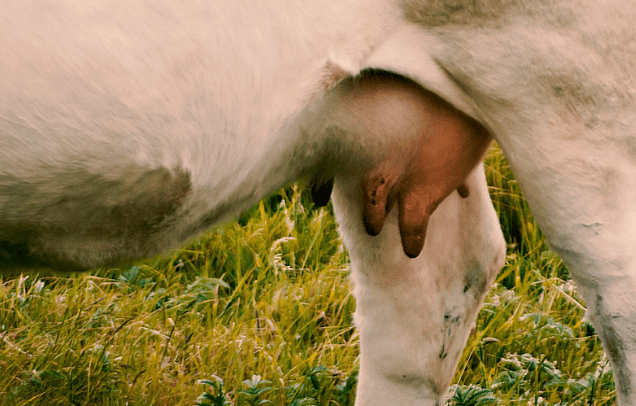
Using a reliable pre-teat dip solution for cows is an important part of maintaining consistent teat hygiene before milking. Delmer Pre Teat Dip Solution is designed for pre-milking teat disinfection and is suitable for cows, buffaloes, camels and goats.
So, how long should pre-dip stay on cow teats before milking? In most dairy-farm routines, a properly applied pre-dip should remain on the teats for at least 30 seconds of contact time, unless the product manufacturer specifies a different time. The key is to follow the approved product label because contact-time requirements vary by formulation.
What Is Pre-Dipping in Dairy Farming?
Pre-dipping is the application of an approved teat disinfectant to the cow’s teats before milking. Its primary purpose is to reduce bacteria present on the teat skin and help lower the risk of environmental mastitis.

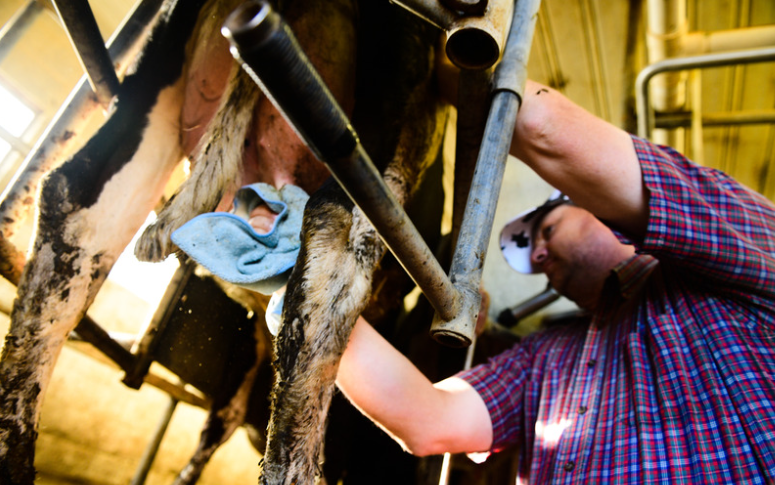
Pre-dip is used before milking, while post-teat dip is applied immediately after milking to support teat and udder hygiene. Using both steps as part of a consistent milking routine can help maintain better hygiene across the milking process.
Unlike simply washing the udder with water, an effective pre-dip routine combines:
- Appropriate teat disinfectant
- Complete teat coverage
- Adequate contact time
- Proper removal of the disinfectant
- Clean milking equipment and hands
Pre-dipping should therefore be treated as part of a complete pre-milking udder hygiene protocol, not as an isolated step.
How Long Should Pre-Dip Stay on Cow Teats?

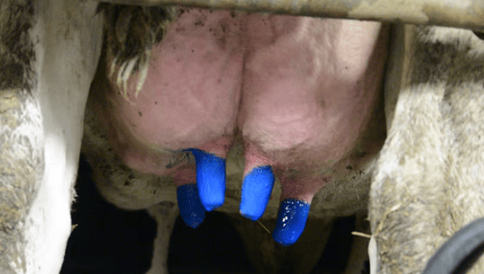
A practical target for many pre-dip products is 30 seconds of contact time.
However, the exact required time depends on the disinfectant formulation and manufacturer instructions. Some products may require longer contact periods.
Once the pre-dip solution for dairy cows has been applied, allow the product to remain in contact with the teat for the time specified on its label before thoroughly wiping the teats clean.
A good dairy-farm routine is:
- Apply the pre-dip thoroughly to the entire teat surface.
- Ensure every teat is visibly covered.
- Allow the disinfectant to remain in contact for the recommended time.
- Thoroughly remove the dip using a clean, single-use or properly prepared towel.
- Make sure the teat ends are clean and dry before attaching the milking unit.
Why Is 30 Seconds Important?

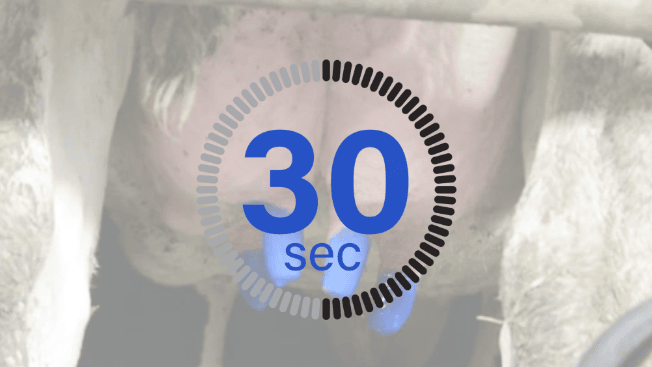
Pre-dip needs time to interact with microorganisms on the teat skin. Removing it immediately after application can reduce the effectiveness of the disinfection process.
At the same time, longer is not automatically better. Dairy workers should follow the product label rather than assuming that extending contact time will always provide additional benefits.
After removing the milking cluster, apply an appropriate post-milking teat disinfectant according to the product instructions.
The Correct Pre-Dipping Process
Step 1: Prepare the Cow and Milking Area
Keep the milking environment as clean and dry as possible. Dirty udders and wet bedding can increase the amount of contamination reaching the teat skin.
Step 2: Apply Pre-Dip
Apply enough approved teat disinfectant to cover the entire teat, including the lower portion and teat end.
Incomplete coverage can leave areas where microorganisms remain.
Step 3: Allow the Required Contact Time
Wait for the manufacturer’s recommended contact time. For many commonly used pre-dip routines, this is around 30 seconds.
Do not immediately wipe off the solution after application.
Step 4: Remove the Pre-Dip Thoroughly
Use a clean towel for each cow or an appropriate single-use towel system.
The objective is to remove disinfectant, dirt and organic material without transferring contamination between cows.
Step 5: Attach the Milking Unit
Only attach the milking cluster when the teats are sufficiently clean and dry.
This helps prevent contaminated material from being drawn into the milking system.
Pre-Dip vs. Post-Dip: What Is the Difference?
Pre-dip and post-dip serve different purposes.
| Teat Hygiene Step | Main Purpose | When Used |
| Pre-dip | Reduce bacteria on teat skin before milking | Before cluster attachment |
| Post-dip | Disinfect and protect teat skin after milking | Immediately after cluster removal |
Pre-dip primarily focuses on reducing contamination before the milking unit is attached, while post-dip is an important part of post-milking teat hygiene.
Does Pre-Dip Contact Time Affect Mastitis Prevention?
Yes, contact time is one factor in effective teat disinfection. However, mastitis prevention depends on the entire milking process, not contact time alone.
Effective teat hygiene is not simply about pre-dipping. A complete routine should include proper pre-dipping, adequate contact time, thorough wiping, dry teats, clean milking equipment, and post-milking teat disinfection.
Other important factors include:
- Correct disinfectant concentration
- Complete teat coverage
- Proper pre-dip contact time
- Effective wiping
- Clean towels
- Proper milking-machine maintenance
- Correct vacuum and pulsation settings
- Clean milking clusters
- Good cow housing hygiene
- Consistent post-dipping
- Proper staff training
This is why dairy farms should develop a standardized milking hygiene SOP rather than relying only on individual worker practices.
Common Pre-Dipping Mistakes on Dairy Farms
1. Wiping the Dip Off Immediately
If the product requires 30 seconds of contact time, wiping it off immediately can compromise the disinfection process.
2. Incomplete Teat Coverage
Applying a small amount of dip only to the teat end may leave much of the teat surface untreated.
3. Using Dirty Towels
A contaminated towel can transfer bacteria from one teat or cow to another.
4. Milking Wet Teats
Excess moisture can create hygiene problems and may increase the risk of contaminated material entering the milking system.
5. Mixing Different Products
Do not mix teat disinfectants unless the manufacturer specifically recommends doing so.
6. Ignoring Product Instructions
Different pre-dip products have different active ingredients, concentrations and contact-time requirements. Always follow the product label and veterinary or dairy-hygiene guidance.
How Long Should You Wait Between Pre-Dip and Milking?
For many products, farms can build a routine around approximately 30 seconds of contact time, followed by thorough wiping and drying.
The effectiveness of a pre-milking teat disinfectant depends not only on application but also on following the manufacturer’s recommended contact time.
A useful way to standardize the process is to make sure the worker does not rush directly from spraying or dipping to attaching the milking cluster.
For larger dairy farms, staff training and a clearly defined milking sequence can make this timing more consistent across shifts.
Does Pre-Dipping Work for All Dairy Cows?
Pre-dipping can be an important part of milking hygiene for lactating dairy cows, but the appropriate product and procedure depend on the farm’s hygiene program, herd health status and local requirements.
Along with good pre-milking hygiene, post-milking teat disinfection is an important component of a comprehensive udder-health program.
If a herd has a high incidence of mastitis, farms should work with a veterinarian or qualified dairy-mastitis specialist to identify the underlying causes rather than relying on teat dip alone.
Best Practices for Effective Pre-Dipping
For consistent results, dairy farms should aim to:
- Use a suitable, approved pre-dip product.
- Cover the entire teat.
- Follow the manufacturer’s specified contact time.
- Target at least 30 seconds only when consistent with the product label.
- Use clean towels.
- Keep teats properly dried before cluster attachment.
- Maintain clean milking equipment.
- Train every milking operator using the same SOP.
- Monitor mastitis and somatic cell count trends.
- Review the hygiene program regularly.
Frequently Asked Questions
How many seconds should pre-dip stay on cow teats?
For many pre-dip products, around 30 seconds is a common target. Always follow the specific product label because required contact time can vary.
Can I wipe pre-dip off immediately?
No, not if the product requires contact time. Removing it immediately can reduce its effectiveness.
Should cow teats be dry before milking?
Yes. Teats should be properly cleaned and dried before the milking unit is attached.
Is pre-dipping necessary before every milking?
A consistent pre-milking teat-disinfection program is widely used to improve udder hygiene, but the exact protocol should be established according to the farm’s herd-health program and product instructions.
Is pre-dip the same as post-dip?
No. Pre-dip is used before milking, while post-dip is applied after milking. They have different roles in the teat-hygiene routine.
What happens if pre-dip contact time is too short?
Insufficient contact time may reduce the disinfectant’s ability to work as intended. Follow the product manufacturer’s recommended exposure time.
Effective dairy teat hygiene involves care both before and after milking. A pre-teat dip solution for cows is used as part of the pre-milking hygiene process, while a post-teat dip solution can be incorporated after milking. Together, these practices help dairy farms establish a consistent teat-care routine.
Final Takeaway
How long should pre-dip stay on cow teats before milking?
For many dairy teat-dip products, approximately 30 seconds of contact time is a practical guideline, but the product label should always take priority.
Effective teat hygiene is not simply about waiting 30 seconds. The best results come from a complete routine: proper coverage → correct contact time → thorough wiping → dry teats → clean milking equipment → consistent post-milking hygiene.
For dairy farms focused on milk quality and udder health, standardizing this process across every milking shift can be just as important as choosing the right teat-dip product.
for more information visit delmerindia.com